What Vacuum Truck Services Cover in the GTA
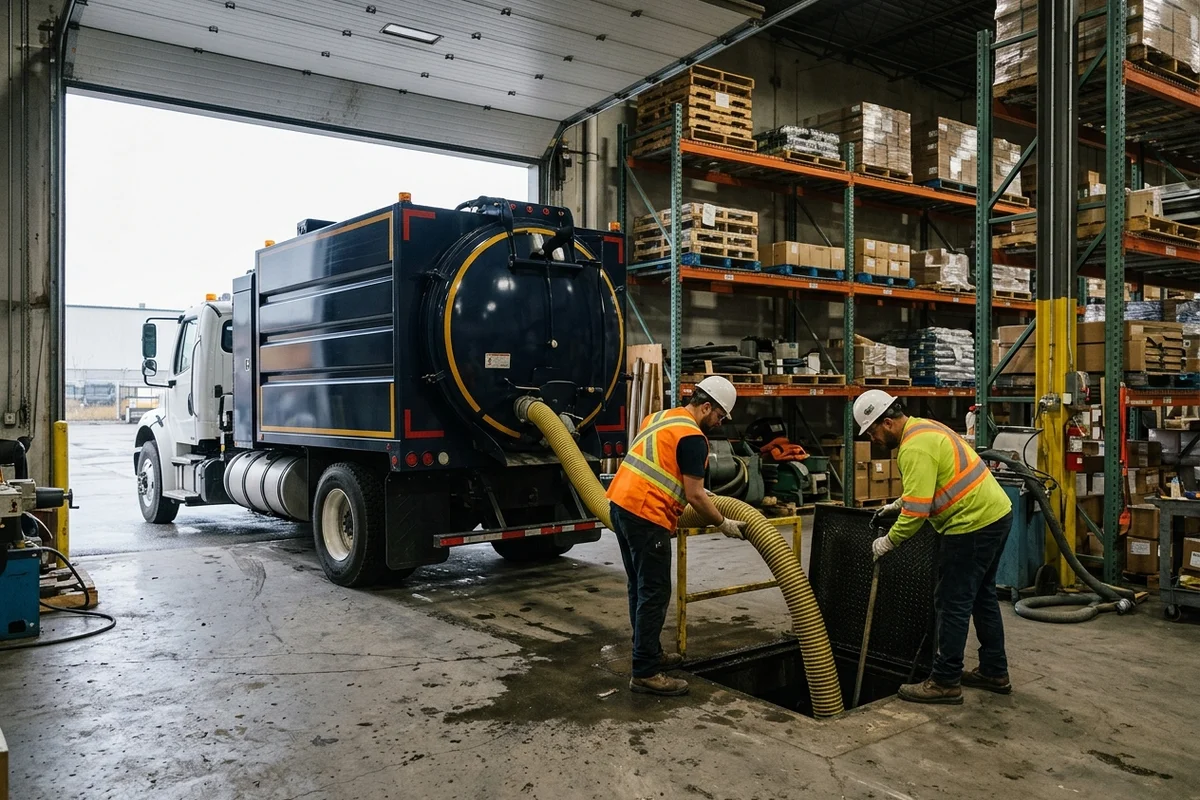
A vacuum truck is a sealed tank on a heavy chassis with a blower that pulls air out of the tank. The pressure difference drags liquid, sludge or dry material up the hose and into the tank. Our trucks run up to 27 inch Hg of suction, which is enough to lift saturated clay and heavy grit, not just water.
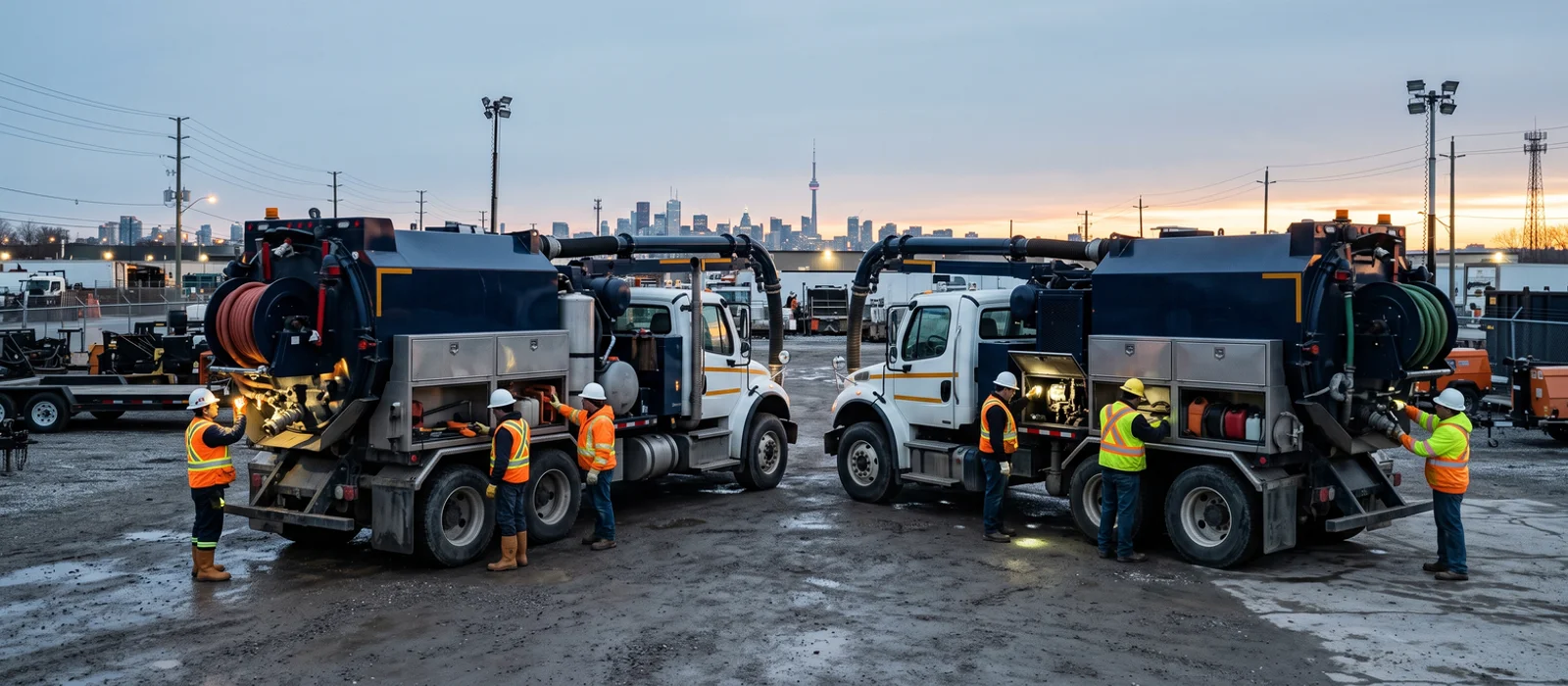
The same three trucks that run our hydrovac excavation work also handle removal jobs: industrial tanks, sumps, interceptors, lift stations and construction sites. On storm and sanitary systems, the work moves over to our sewer and culvert cleaning crews, which add a jetter to the mix.
Wet vacuum vs dry vacuum
- Wet vacuum handles water, slurry, sludge and liquid industrial waste. A decant system can return clear water on site where permitted, cutting disposal volume.
- Dry vacuum handles gravel, sand, roof ballast, debris and spilled material. Cyclonic filtration protects the blower and keeps dust down around people.
Sizing the Truck: The Part Most Quotes Skip
The biggest cost driver on vacuum work is not the hourly rate. It is how many times the truck has to leave the site.
| Job | Typical volume | Truck we send | Why |
|---|
| Single sump or interceptor | Under 1,500 gal | 2,500 gal | One trip, lowest rate |
| Wash bay with trench drains | 2,000-5,000 gal | 6,000 gal | Saves 1-2 dump trips |
| Industrial tank cleanout | Varies | Either, plus dewatering | Cuts disposal cost |
| Roof ballast or gravel spill | By weight | Dry vac setup | Axle limits first |
| Hydro vault pump-out | 500-2,000 gal | 2,500 gal | Tight urban access |
A round trip to a licensed facility can take 60 to 90 minutes in GTA traffic. At $280-$450 CAD per hour, a second trip easily costs more than the difference between our two truck sizes. We do this math before the quote, everytime.
Field note from our crew
Nine times out of ten, this is where the previous contractor cut a corner: they sent the small truck because it was available, then billed the extra trips. We would rather tell you up front which truck fits.
Liquid Industrial Waste and Your Paperwork
Liquid industrial waste in Ontario has to go to a receiving facility approved by the Ministry of the Environment, Conservation and Parks (MECP), and every load needs a manifest. Before we arrive, we confirm:
- What the material is and whether a waste profile exists.
- The approved receiving facility for that waste class.
- Who signs as the generator on your side.
The driver hands over your copy at the gate. If your facility is audited, the trail is complete.
Confined Space Entry
Some cleanouts need a person inside the tank, pit or vault. Our crews are confined space trained and bring continuous gas monitoring, ventilation and a rescue plan. Alex Novak spent seven years running a vacuum truck on confined space cleanouts and hazmat response before he founded the company, and that discipline is built into how we run entries today.
What Affects Vacuum Truck Cost in Toronto?
- Volume and material: liquid, sludge or dry, and how much of it.
- Truck size: $280-$350/hr standard, $350-$450/hr for the 6,000 gallon unit.
- Disposal: billed by load at the receiving facility’s rate, on its own line.
- Access: long hose runs, rooftop work or confined space entry add setup time.
- Timing: business-hours scheduling by default; sewer, water main and insurance emergencies get 24/7 dispatch at off-hours rates.
Commercial facilities across the GTA can book a free on-site assessment. Our lead technician brings a tank capacity worksheet and disposal options so the quote matches the job.