What Is Hydrovac Excavation and Why Toronto Sites Use It
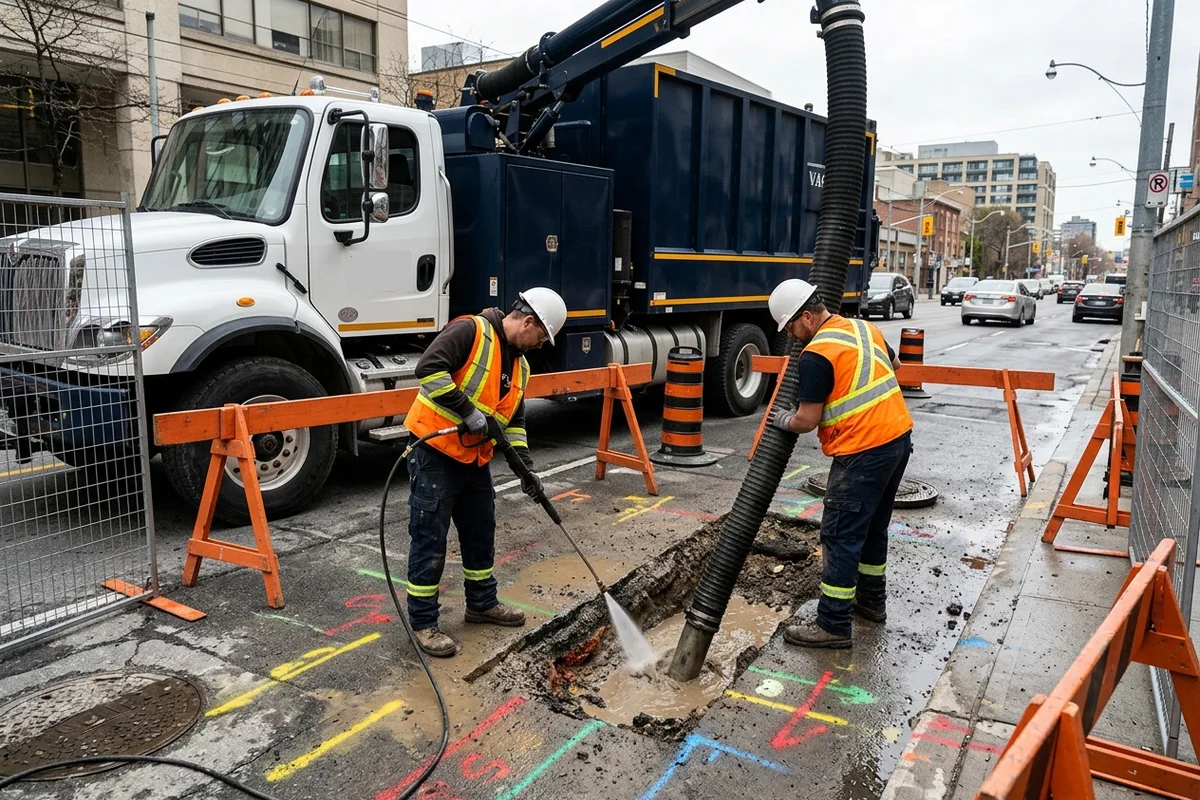
Hydrovac excavation, also called hydro excavation or vacuum excavation, is a non-destructive digging method. A triplex water pump on the truck sends 3,000-4,000 PSI water through a hand-held wand to cut soil loose. A positive displacement blower pulls up to 27 inch Hg of vacuum through a dig tube mounted on a telescopic boom, and the spoil slurry travels up the tube into a sealed debris tank. Nothing with teeth touches the ground.
That matters in Toronto more than almost anywhere in Ontario. The city has cast iron water mains from the early 1900s, Toronto Hydro duct banks, Enbridge gas mains and services, and three generations of telecom sharing the same boulevards. Locate paint tells you roughly where a line is. Hydrovac tells you exactly where it is, how deep it sits and what it is made of.
Our crews use it for utility daylighting, potholing for engineering design, backfill removal around live services and confined space digs. When the scope is narrow and linear, we switch to slot trenching. When it is a foundation, we run pile hole excavation on the same truck.
How the equipment works on site
- Triplex water pump and wand: 3,000-4,000 PSI, adjustable for clay, sand or frozen ground. Heated water from November to April.
- Positive displacement blower: 23-27 inch Hg vacuum lifts saturated clay, gravel and cobbles that a small vac truck would choke on.
- Telescopic boom and dig tube: positions the hose over the hole so the operator works at a safe distance from traffic.
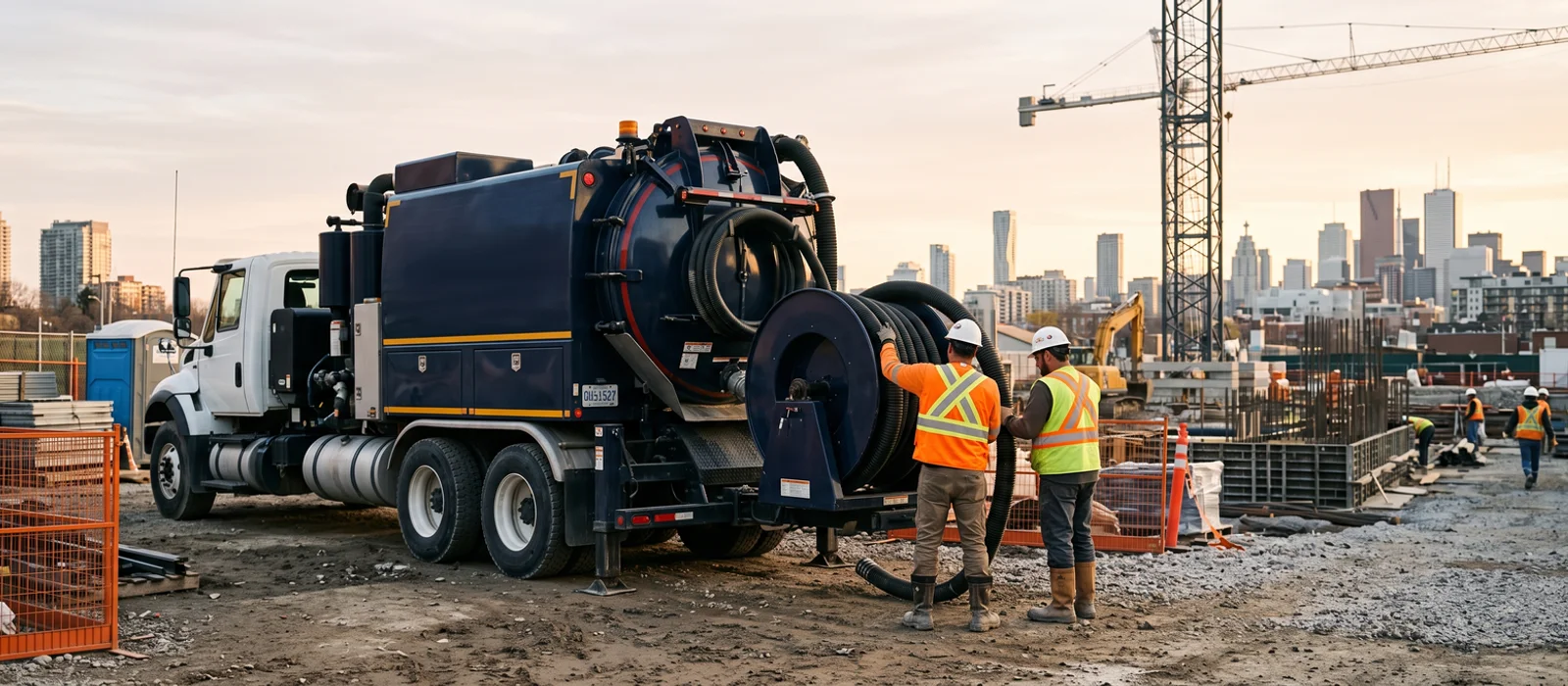
- Debris tank: 2,500 to 6,000 gallons depending on the truck. Tanks are TSSA pressure vessel compliant and inspected on schedule.
When Do You Need Hydrovac Excavation Instead of a Backhoe?
The short answer: anywhere a buried utility is inside the locate tolerance zone, or anywhere you cannot afford to guess. In practice that covers most of the work we do across the GTA.
- Crossings and tie-ins. Every time new pipe, conduit or footing crosses an existing service, the crossing should be exposed first.
- Design test pits. Engineers need real depths before stamping drawings. A test pit costs a few hundred dollars; a redesign after a conflict costs weeks.
- Digging beside live services. Backfill removal around energized duct banks or pressurized gas is hydrovac work under CSA Z247.
- No room for a machine. Garages, courtyards, laneways and rooftop drains where a backhoe cannot fit.
- Frozen ground. Hot water gets through frost that slows a bucket to a crawl.
Field note from our crew
Running a hydrovac without ON1Call locates is like merging onto the 401 without checking your mirrors. We will not start a dig without a valid ticket, everytime, even when the site super swears nothing is down there.
Hydrovac vs Open-Cut Excavation: The Honest Comparison
| Factor | Open-cut with backhoe | Hydrovac excavation |
|---|
| Utility strike risk | High inside tolerance zones | Near zero, water does not cut jackets |
| Footprint | Wide trench, large spoil pile | Keyhole or narrow trench, spoil in tank |
| Restoration | Large asphalt and sod repair | Small patch per hole |
| Frozen ground | Slow, often stopped | Heated water cuts frost |
| Hourly cost | Lower | $280-$450 CAD |
| Cost of one strike | $10,000 to $100,000+ CAD | Avoided |
Open-cut excavation around a known fiber line is like a Halloween-store scissors: cheap, fast, and you’ll regret the result for months.
What Affects the Cost of a Toronto Hydrovac Excavation?
Five things move the number on a hydrovac quote, and every one of them appears on its own line:
- Hours on site. Soil type, depth and the number of holes drive time. Clay and frozen ground take longer than sand.
- Truck size. The 6,000 gallon unit costs more per hour but often saves a dump trip, which saves an hour.
- Disposal. Slurry goes to a licensed facility and is billed by load.
- Mobilization. One line, published up front. No hidden yard-to-site surcharges.
- Timing. Scheduled excavation is booked during business hours. Weekend work runs $500-$700/hr.
Commercial projects across the GTA get a free on-site assessment. Our lead technician brings a tank capacity worksheet, the locate map and disposal options, so the quote you recieve is built on your actual site, not a guess.
Toronto Compliance We Work Under
Every excavation follows Ontario Regulation 213/91 for construction projects, including trench protection whenever a worker enters a hole deeper than 1.2 m. Ground disturbance near utilities follows CSA Z247. Locates come through Ontario One Call, and work on City of Toronto property also follows Toronto Municipal Code 847. Truck tanks are TSSA pressure vessel compliant. We carry $5M commercial general liability, $2M property damage and full WSIB coverage for every crew member.